Free OBD2 Code Simulator

OBD2 Code Simulator practice scan codes, live data, misfires, and no-start diagnosis

OBD2 Code Simulator generates a browser-based car fault case with symptoms, Check Engine light status, OBD2 codes, freeze frame values, live sensor readings, virtual inspections, repair cost, and diagnostic scoring.

Built for beginner technicians, DIY car owners, automotive students, and anyone learning diagnostic trouble codes.

OBD2 Code Simulator interactive diagnostic scanner

Start OBD2 Code Simulator here: pick Scan Code Mode, Live Data Mode, Misfire Mode, or No Start Mode, read the virtual scanner, choose checks, and submit the most likely repair.

OBD2 Code Simulator controls

Choose a diagnostic mode, read codes, spend virtual time on checks, then submit your diagnosis.

Diagnostic mode

Next inspection items

Each inspection costs virtual time and money. Useful checks improve the final score.

Final diagnosis

Share OBD2 Code Simulator

Share the clean page, or copy a result link only when you want to preserve this case.

Score

--

Time used

0 min

Repair cost

$0

Diagnostic mode

Scan Code Mode

Random diagnostic case

Vehicle symptoms

Start behavior

OBD2 trouble codes

Freeze frame data

stored snapshot

Live data stream

scan needed

Inspection feedback

Diagnostic result

Read the case, then diagnose

Use symptoms, codes, freeze frame data, and live sensor readings before choosing the final cause and repair.

OBD2 Code Simulator is an educational simulator. Real vehicles need service information, safe procedures, and qualified repair decisions.

OBD2 Code Simulator OBD2 code lookup

Use the OBD2 Code Simulator as a quick OBD2 code lookup before you practice. Search common trouble codes, read what each code usually means, and follow a diagnostic path before buying parts.

P0300

Meaning

Random/multiple cylinder misfire detected

High

Common causes

  • Worn spark plugs or weak ignition coils
  • Vacuum leak or lean air/fuel mixture
  • Low fuel pressure, injector issue, or compression problem

Symptoms

  • Rough idle or shaking
  • Hesitation under load
  • Flashing or solid Check Engine light

What to check first

If the light flashes, reduce load and stop when safe. Then read freeze frame, misfire counters, fuel trims, plugs/coils, and vacuum leaks.

Can I drive?

Avoid driving with a flashing light or strong shaking. A steady light with mild symptoms may be driven carefully to diagnosis.
P0301

Meaning

Cylinder 1 misfire detected

High

Common causes

  • Cylinder 1 spark plug or coil fault
  • Cylinder 1 injector fault
  • Compression or vacuum issue affecting one cylinder

Symptoms

  • Shaking at idle
  • Loss of power
  • Fuel smell or flashing light under load

What to check first

Inspect the cylinder 1 plug and coil, then use a coil swap or injector balance test before replacing parts.

Can I drive?

Do not keep driving if it shakes hard or the light flashes. Short careful driving to a shop is usually only for mild steady-light cases.

P0171

Meaning

System too lean, bank 1

Medium

Common causes

  • Vacuum leak after the MAF sensor
  • Dirty or under-reporting MAF sensor
  • Low fuel pressure or restricted fuel delivery

Symptoms

  • Long crank or rough idle
  • Lack of power on hills
  • Positive fuel trims and possible misfire codes

What to check first

Compare short and long fuel trims, inspect intake leaks, then test MAF data and fuel pressure under load.

Can I drive?

Usually driveable for a short trip if mild, but avoid heavy load and fix soon because lean running can cause misfires or heat.

P0420

Meaning

Catalyst system efficiency below threshold, bank 1

Medium

Common causes

  • Aged catalytic converter
  • Exhaust leak before or near the catalyst
  • Oxygen sensor issue or unresolved misfire, rich condition, or oil burning

Symptoms

  • Often no drivability symptom
  • Emissions test failure
  • Possible sulfur smell or reduced power if severe

What to check first

Confirm there are no active misfire or fuel-trim codes, rule out exhaust leaks, then compare upstream and downstream O2 sensor activity.

Can I drive?

Usually can be driven to diagnosis if there is no flashing light, overheating, or major power loss. It may fail emissions testing.

P0113

Meaning

Intake air temperature sensor circuit high input

Low

Common causes

  • Unplugged IAT sensor or loose connector
  • Open signal or ground wire
  • Failed IAT sensor

Symptoms

  • Impossible cold intake temperature reading
  • Hard start or poor cold fueling
  • Reduced fuel economy

What to check first

Compare IAT to ambient temperature, inspect the connector and wiring, then test signal voltage before replacing the sensor.

Can I drive?

Often driveable for a short trip, but repair soon because the PCM may calculate air density incorrectly.

P0122

Meaning

Throttle position sensor circuit low input

Medium

Common causes

  • Corroded or loose throttle/TPS connector
  • Short to ground or open reference circuit
  • Faulty throttle position sensor or throttle body

Symptoms

  • Limited throttle response
  • Limp-mode acceleration
  • Stalling or poor idle

What to check first

Check throttle angle live data, inspect connector pins, and test 5 V reference, ground, and signal voltage.

Can I drive?

Drive only if throttle response is predictable. Limp mode, stalling, or unsafe acceleration needs repair before normal driving.

P0335

Meaning

Crankshaft position sensor circuit fault

High

Common causes

  • Failed crankshaft position sensor
  • Damaged sensor wiring or connector
  • Timing signal problem or damaged reluctor wheel

Symptoms

  • Cranks but does not start
  • RPM stays at zero while cranking
  • Intermittent stall or no spark command

What to check first

Watch RPM while cranking, verify battery voltage and fuel pressure, then test crank sensor signal and wiring.

Can I drive?

If the engine stalls or will not start, do not drive. Intermittent P0335 can leave the vehicle stranded.

OBD2 Code Simulator diagnostic path

A trouble code names the system that failed a monitor. The OBD2 Code Simulator path keeps the next step evidence-based.

01

Read codes

Record stored, pending, and permanent codes before clearing anything.

02

Check freeze frame

Use RPM, load, speed, coolant, and fuel trim to see when the fault happened.

03

Compare live data

Watch fuel trims, O2 activity, RPM, battery voltage, pressure, and sensor signals.

04

Inspect components

Test the most likely system with visual checks, connector checks, voltage checks, pressure checks, or swap tests.

05

Conclude

Choose a repair only after the code, symptom, freeze frame, live data, and inspection agree.

OBD2 Code Simulator diagnostic workflow

OBD2 Code Simulator turns trouble codes, freeze frame values, and live data into a realistic training loop: read, inspect, decide, and learn.

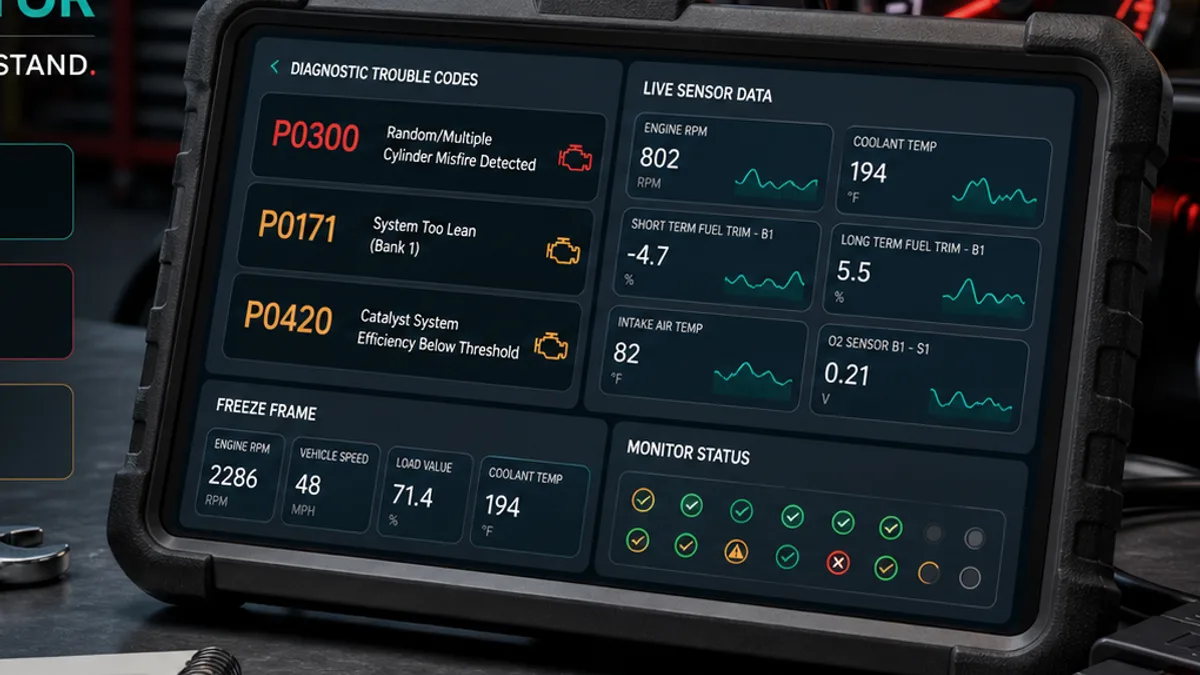
OBD2 Code Simulator scan and freeze frame cases

Read P0300, P0301, P0171, P0420, P0113, P0122, no-start data, OBD2 code lookup details, and freeze frame snapshots before spending virtual time.

OBD2 Code Simulator scanner screen with codes, freeze frame data, and vehicle symptoms

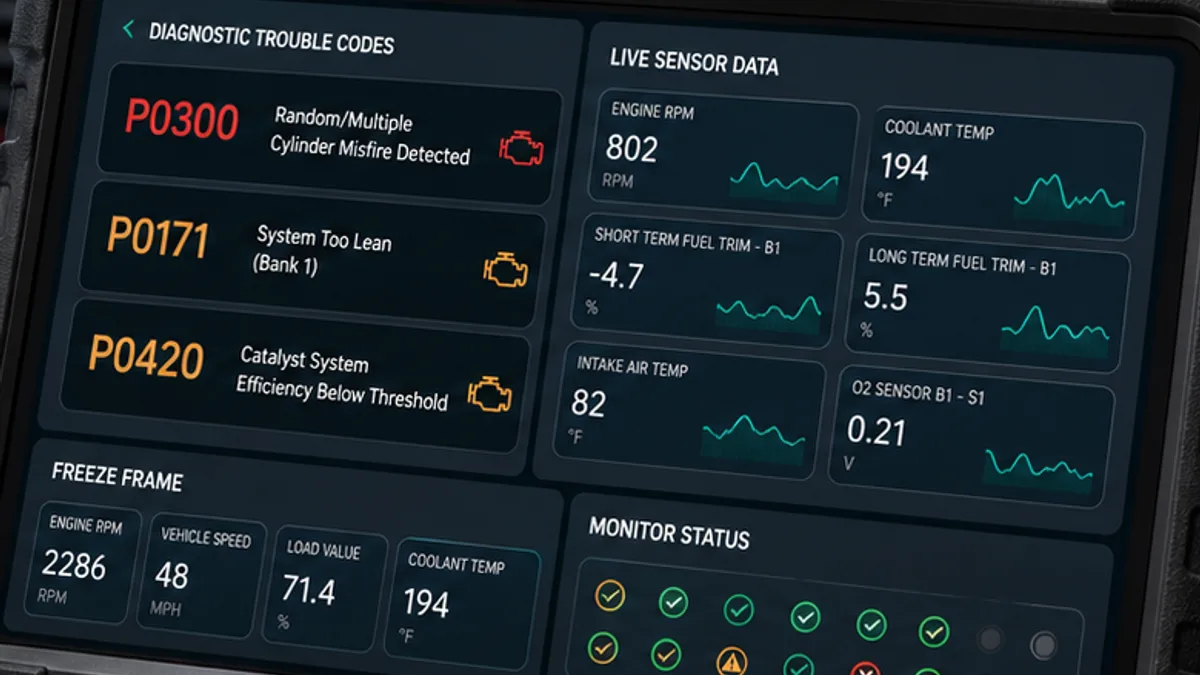
OBD2 Code Simulator live data and scoring

Compare RPM, MAF/MAP, fuel trim, oxygen sensor, battery voltage, fuel pressure, and ignition signal, then get a score and learning path.

OBD2 Code Simulator live data dashboard showing sensor readings and diagnostic scoring

OBD2 Code Simulator quick guide

Use this OBD2 Code Simulator guide to practice a disciplined scan-tool workflow instead of guessing parts.

01

Read OBD2 Code Simulator case evidence

Start with symptoms, Check Engine light behavior, start behavior, stored codes, and freeze frame values.

  • Scan before choosing parts
  • Treat a flashing Check Engine light as urgent in the simulation
Open simulator
02

Inspect with OBD2 Code Simulator live data

Use live readings to decide whether the fault points to ignition, fuel, air, sensor signal, battery voltage, or crank signal.

  • Positive fuel trims point toward lean conditions
  • Zero RPM while cranking points toward crank signal issues
See features
03

Submit OBD2 Code Simulator repair decision

Choose the most likely cause and repair. The result explains score, wasted checks, correct path, and learning notes.

Good diagnosis is evidence order, not part swapping.

Read FAQ

OBD2 Code Simulator features

OBD2 Code Simulator includes the scan-tool details learners expect from a browser diagnostics trainer.

OBD2 Code Simulator fault code cases and lookup

Look up and practice P0300, P0301, P0171, P0420, P0113, P0122, P0335, weak battery, and fuel pressure cases.

Read codes

OBD2 Code Simulator live sensor data

Review RPM, coolant, intake air, MAF/MAP, throttle, trims, O2, battery, pressure, and ignition signal.

View data

OBD2 Code Simulator inspection cost

Every check consumes virtual time and money so learners practice efficient test order.

Choose checks

OBD2 Code Simulator no-start mode

Practice weak battery, starter, fuel pump, crank sensor, ignition signal, fuses, and security lockout logic.

Try no-start

OBD2 Code Simulator scoring

Get score, time, cost, error reason, correct path, and explanation after submitting the repair.

Get score

OBD2 Code Simulator sharing

Share the clean page or explicitly copy a result link for a specific generated case.

Share case

OBD2 Code Simulator learning use cases

OBD2 Code Simulator is built for learners who need diagnostic reasoning practice before real repair work.

OBD2 Code Simulator for beginners

Learn what common OBD2 codes suggest and what they do not prove by themselves.

Beginner
Practice now

OBD2 Code Simulator for automotive students

Practice scan-tool evidence, freeze frame interpretation, and inspection order for class labs.

Classroom
Start lab

OBD2 Code Simulator for DIY owners

Understand likely next checks before buying parts or visiting a repair shop.

DIY
Diagnose case

OBD2 Code Simulator for misfire practice

Compare random misfire, cylinder-specific misfire, lean mixture, and ignition evidence.

Misfire
Try misfire

More tools after OBD2 Code Simulator

After OBD2 Code Simulator, try another free browser simulator for science, school, money, planning, or learning practice.

Final Grade Simulator

Calculate the final exam score you need, test weighted course modules, and compare 70, 80, 90, and 100 scenarios.

Final Grade Simulator preview showing weighted grade controls and final exam result scenarios
Open simulator

GPA Simulator

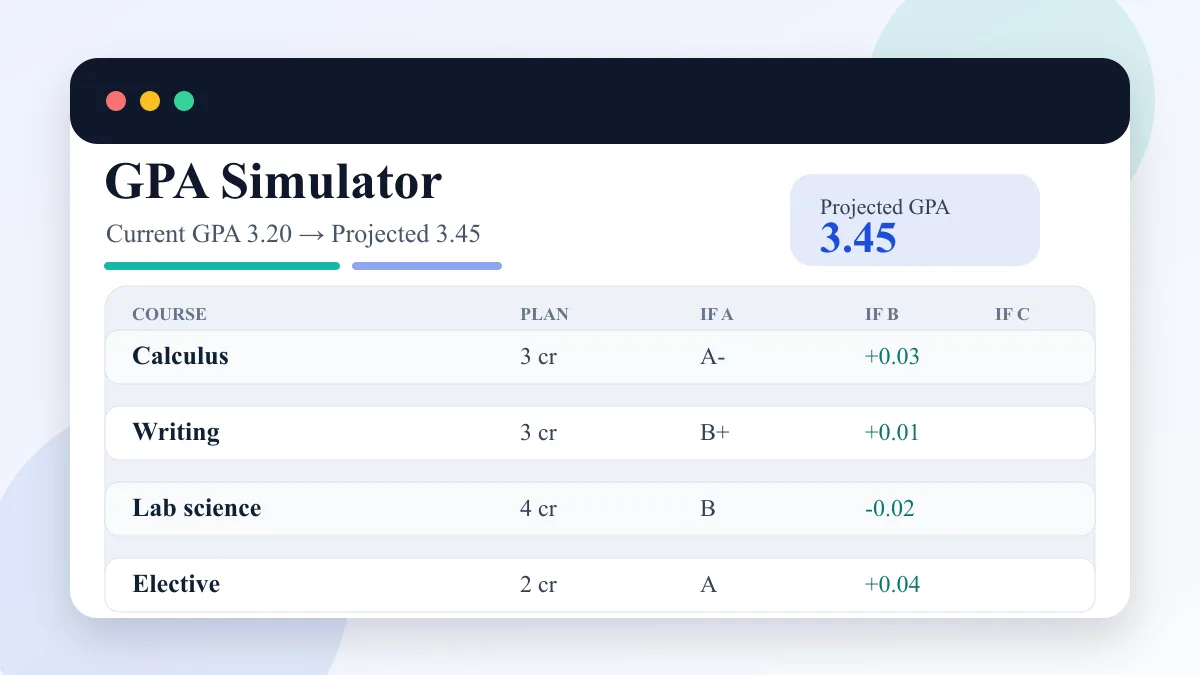
Enter current GPA, completed credits, target GPA, and semester courses to compare A/B/C GPA scenarios.

GPA Simulator preview showing current GPA, semester courses, A/B/C scenarios, and projected GPA
Open simulator

Logic Gate Simulator

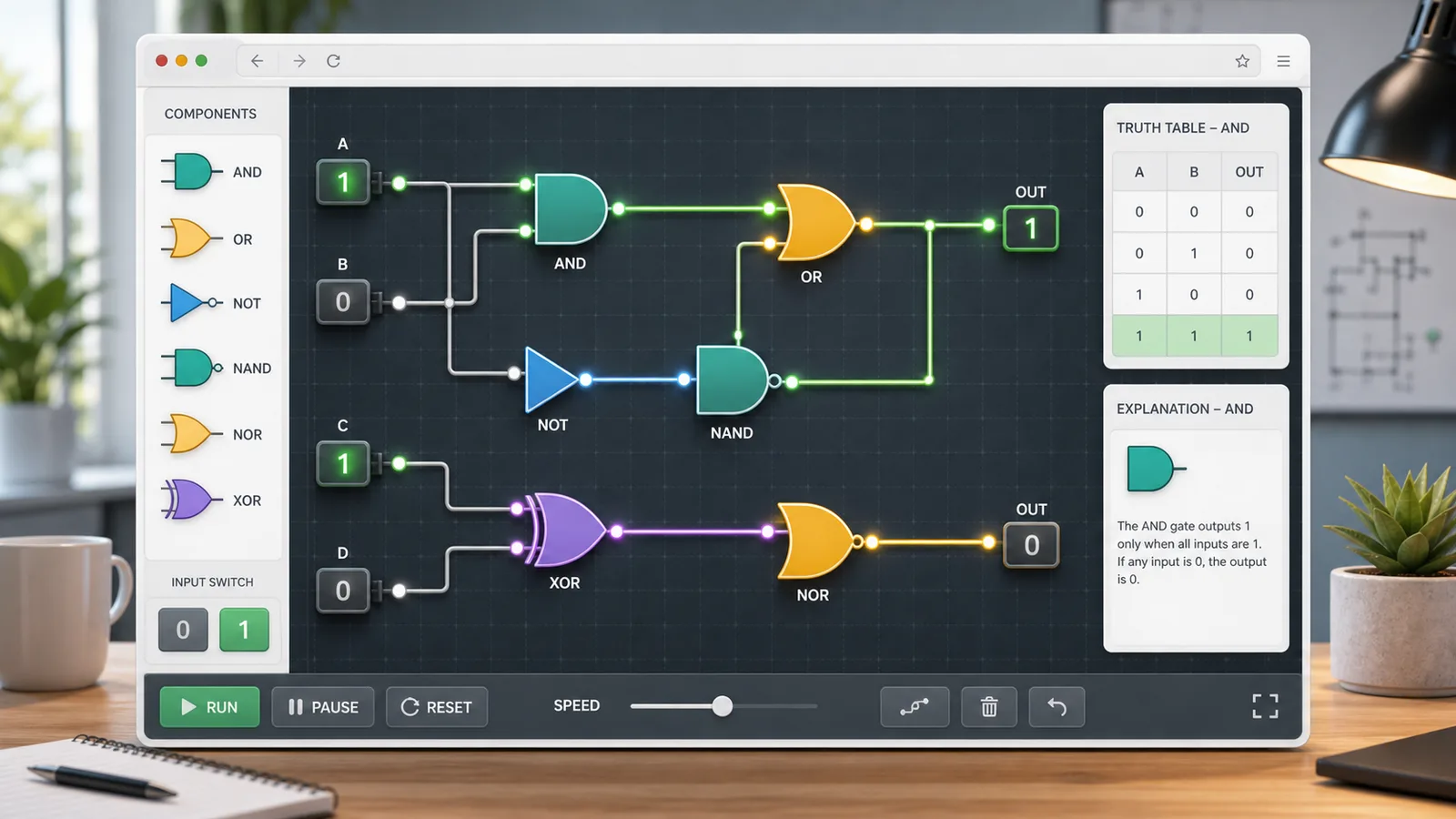
Choose AND, OR, NOT, NAND, NOR, or XOR gates, toggle 0/1 inputs, read truth tables, and build simple circuits.

Logic Gate Simulator preview showing logic gates, binary inputs, truth table, explanation, and circuit builder
Open simulator

Typing Test Simulator

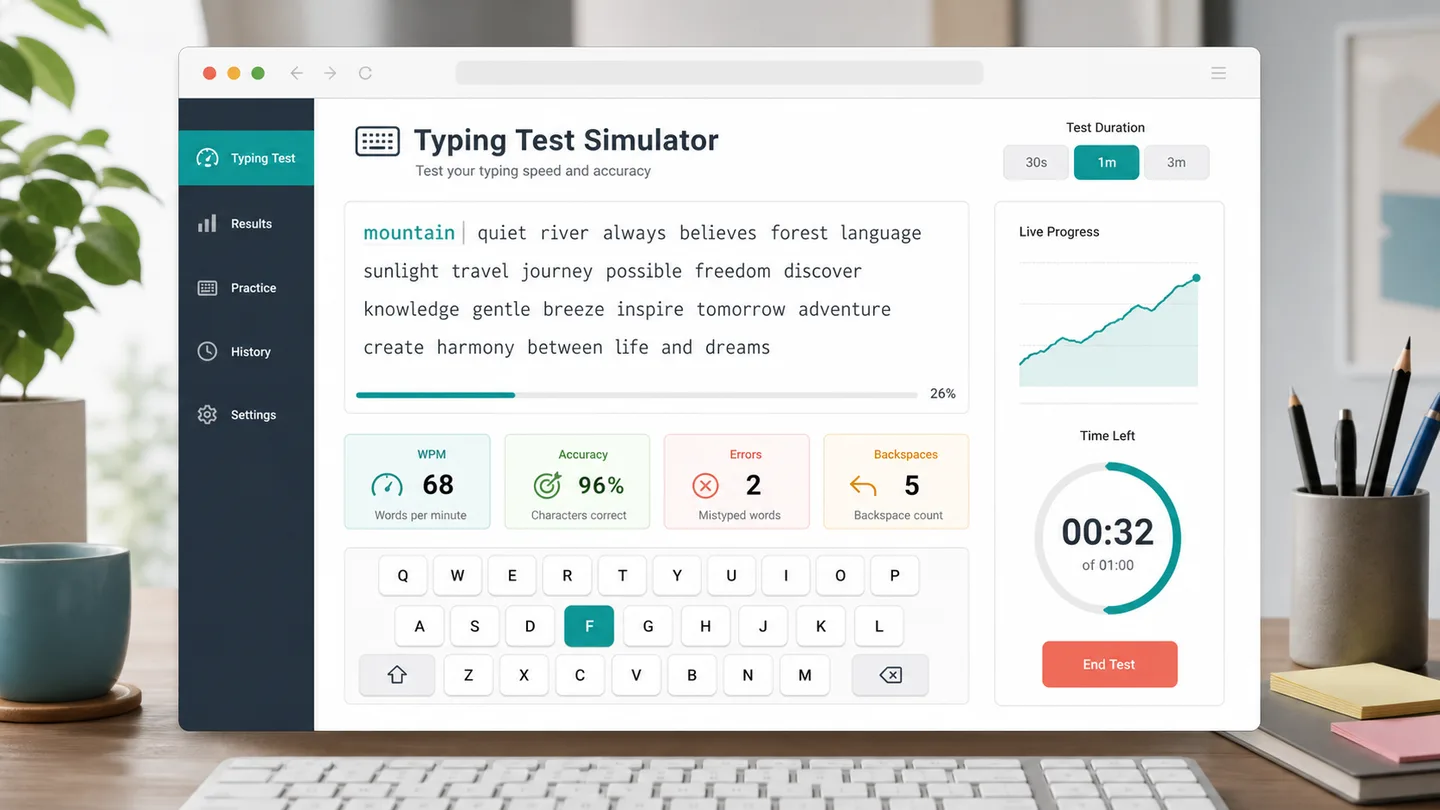
Choose a 30 second, 1 minute, or 3 minute typing test to track WPM, accuracy, errors, backspaces, and progress.

Typing Test Simulator preview showing WPM, accuracy, errors, backspaces, progress, and typing advice
Open simulator

Driving Test Simulator

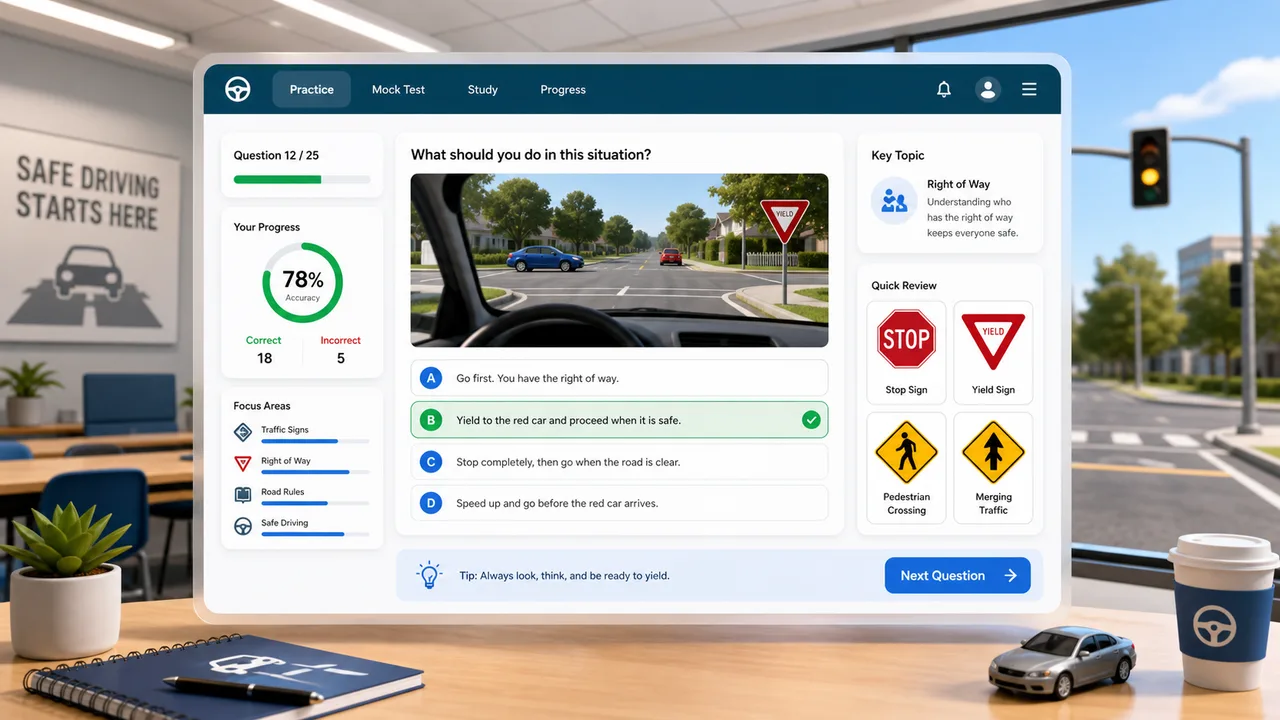
Practice traffic signs, right-of-way, hazards, parking rules, and mock exam questions with instant explanations.

Driving Test Simulator preview showing road rule questions, answer choices, score tracking, and review advice
Open simulator

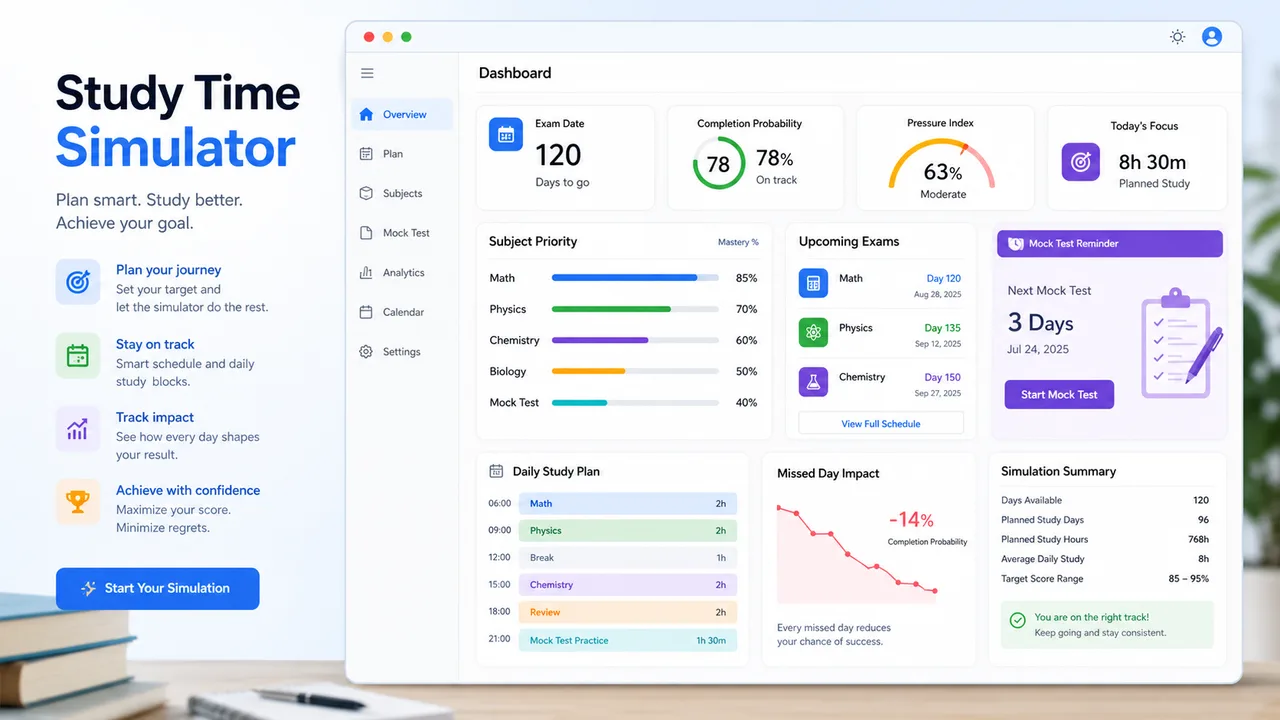
Study Time Simulator

Allocate daily study time by exam date, subject difficulty, mastery, target score, remaining content, pressure, and completion probability.

Study Time Simulator preview showing subject priorities, daily study plan, pressure index, completion probability, and review tasks
Open simulator

Dice Probability Simulator

Choose dice count, sides, modifier, target, comparison, advantage, disadvantage, rerolls, and exploding dice to calculate success odds, average result, range, and distribution.

Dice Probability Simulator preview showing polyhedral dice, target controls, success probability, and a result distribution chart
Open simulator

Tabletop Battle Simulator

Enter attackers, hit rate, damage dice, critical rules, defense, armor, hit points, and rounds to estimate damage, kill odds, survival odds, expected rounds, and tactic win chance.

Tabletop Battle Simulator preview showing miniatures, dice, armor tokens, hit chance charts, damage curves, kill probability, and tactic win rate
Open simulator
View all simulators

OBD2 Code Simulator FAQ

Fast answers about OBD2 Code Simulator, OBD2 codes, live data, freeze frame values, no-start checks, and diagnostic scoring.

Is OBD2 Code Simulator free?

Yes. OBD2 Code Simulator runs in the browser without an account or installation.

What does OBD2 Code Simulator simulate?

OBD2 Code Simulator simulates vehicle symptoms, Check Engine light state, OBD2 codes, freeze frame values, live sensor data, inspection choices, diagnosis scoring, and repair explanations.

Does OBD2 Code Simulator include OBD2 code lookup?

Yes. The page now includes OBD2 code lookup for P0300, P0171, P0420, P0113, P0301, P0122, and P0335 with meaning, common causes, symptoms, first checks, and driveability notes.

Can OBD2 Code Simulator teach P0300 and P0301 misfire diagnosis?

Yes. OBD2 Code Simulator includes random/multiple misfire and cylinder-specific misfire cases with ignition, fuel, air, and sensor clues.

Does OBD2 Code Simulator include no-start cases?

Yes. OBD2 Code Simulator includes weak battery and crankshaft sensor no-signal cases, plus checks such as starter, fuses, fuel pressure, ignition signal, and security lockout reasoning.

Can OBD2 Code Simulator replace a mechanic or scan tool?

No. OBD2 Code Simulator is for education and practice. Real diagnosis requires a vehicle-specific service manual, safe testing, and qualified repair judgment.

Start OBD2 Code Simulator now

Open OBD2 Code Simulator, read the generated case, connect the virtual OBD2 scanner, and inspect live data before choosing a repair.

Compare your score, virtual time, cost, recommended path, and learning explanation.

OBD2 Code Simulator keeps the default route clean; result URLs are created only when copied explicitly.