Choose Sleep Schedule Simulator direction
Pick wake-up mode to find bedtimes, or bedtime mode to find better wake-up options.
- Use wake-up mode for school, work, flights, and appointments
- Use bedtime mode when you already know when you can get in bed
Free Sleep Schedule Simulator
Sleep Schedule Simulator helps you work backward from a planned wake-up time or forward from bedtime, then ranks options by sleep cycles, total sleep, and likely alertness.
Built for workdays, weekends, shift work, early prep time, sleep latency, and 90-minute cycle planning.
Start Sleep Schedule Simulator here: choose wake-up or bedtime mode, enter sleep latency, desired cycles, prep time, deep-sleep avoidance, and routine pattern.
Choose a direction, add your average time to fall asleep, then compare cycle-aligned schedule options.
Planning mode
Sleep timing
Buffers and wake quality
Routine pattern
Normal edits keep the clean page URL. Copy a result link only when you want to share this exact schedule.
Most practical time
Sleep cycles
Sleep duration
Likely state
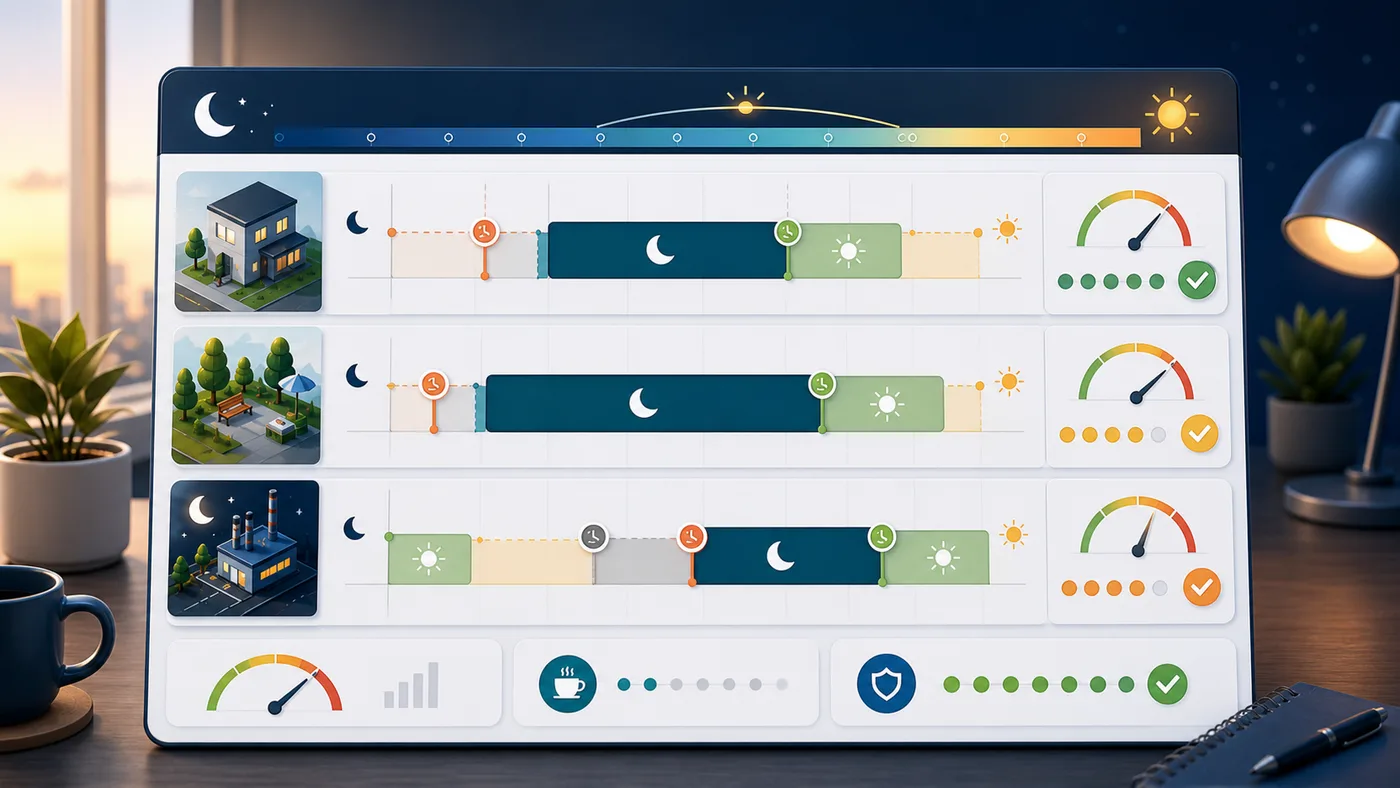
See latency, sleep cycles, wake time, and preparation buffer on one timeline.
Sleep Schedule Simulator uses common 90-minute cycle estimates for planning. It is not medical advice; speak with a qualified clinician for persistent insomnia, daytime sleepiness, or health concerns.
Sleep Schedule Simulator turns a wake-up target or bedtime into cycle-aligned options that include sleep latency and prep buffers.
Sleep Schedule Simulator works backward from a planned wake-up time and lists bedtimes for 90-minute cycle counts.
Sleep Schedule Simulator compares workday, weekend, and shift-work patterns so you can notice large schedule swings.
Use this Sleep Schedule Simulator guide to choose a mode, set realistic buffers, and interpret the ranked schedule options.
Pick wake-up mode to find bedtimes, or bedtime mode to find better wake-up options.
Enter your average sleep latency, desired cycles, and preparation time so the result reflects real life.
Compare most recommended, barely workable, and sleep-deprived options with total sleep and likely morning state.
Cycle math is useful, but consistent timing and enough total sleep still matter.
Explore more simulatorsSleep Schedule Simulator focuses on the practical details people forget when they only count total hours.
Enter a planned wake-up or ready time and see recommended bedtimes after sleep latency.
Enter bedtime and compare cycle-aligned wake-up times with likely morning state.
Sort options into most recommended, barely workable, and sleep-deprived tiers.
Include early preparation time so alarms are not planned too late.
Prioritize cycle-boundary wake-ups when you want to reduce groggy alarms.
Compare workday, weekend, and shift-work timing to spot large schedule swings.
Sleep Schedule Simulator helps when your schedule has a real constraint and you need a realistic sleep window.
Plan bedtimes around commute, prep time, and a fixed morning alarm.
Check whether sleeping in creates a large swing from the weekday routine.
Work backward from a flight, exam, workout, or school drop-off time.
Estimate how much rotating shifts change wake timing and recovery windows.
After Sleep Schedule Simulator, try related planning tools for daily routines, travel, home, and personal decisions.
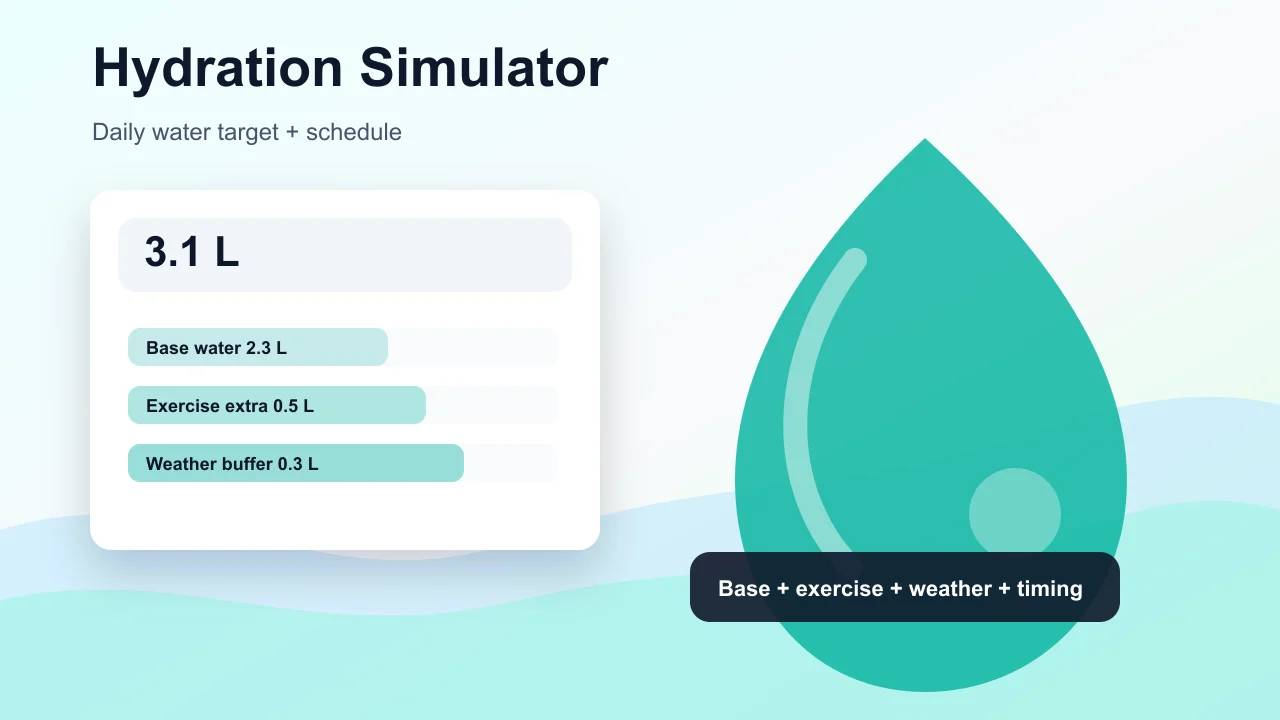
Enter weight, age, temperature, workout time, sweat level, coffee, and alcohol to estimate daily water needs and a drinking schedule.
Choose a cat, dog, rabbit, or dog size, enter real age, and estimate human-equivalent age, life stage, and care tips.
Enter a last menstrual period, conception date, ovulation date, or IVF transfer date to estimate due date, pregnancy week, trimester, and key prenatal milestones.
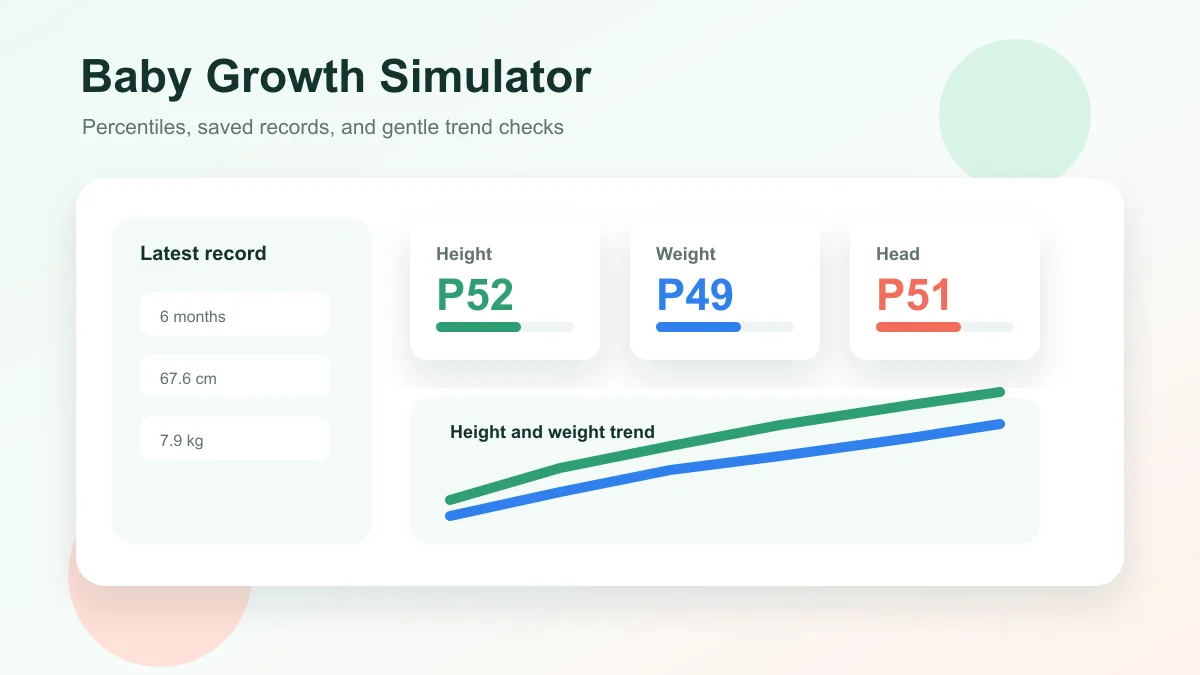
Enter baby age, sex, height, weight, and head circumference to estimate growth percentiles and track height and weight trends over time.
Choose oven temperature, pizza thickness, toppings, and bake time to get crust score, doneness, and baking advice.
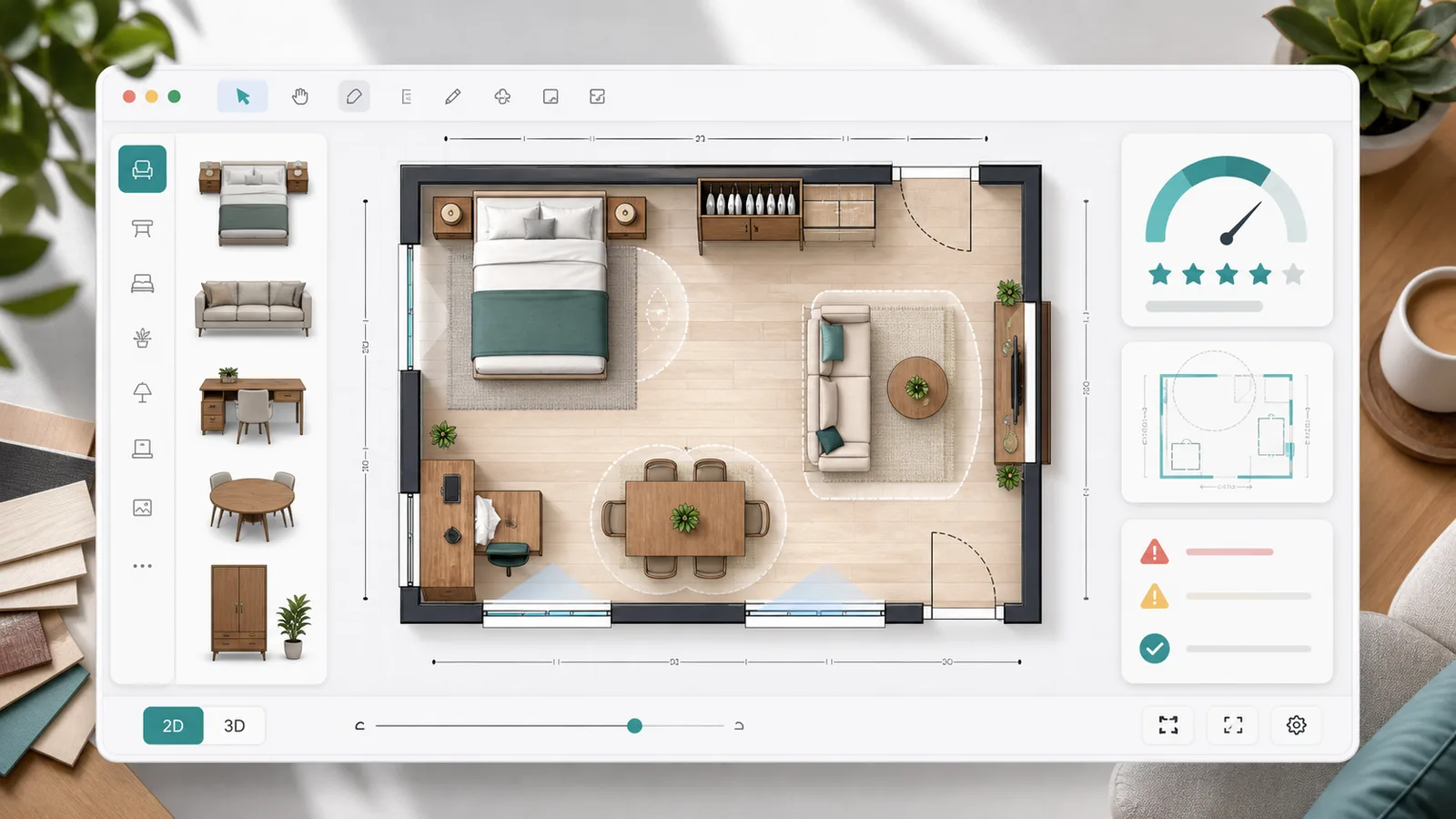
Plan a 2D room layout with dimensions, doors, windows, draggable furniture, clearance checks, layout scores, saved schemes, and exportable reports.
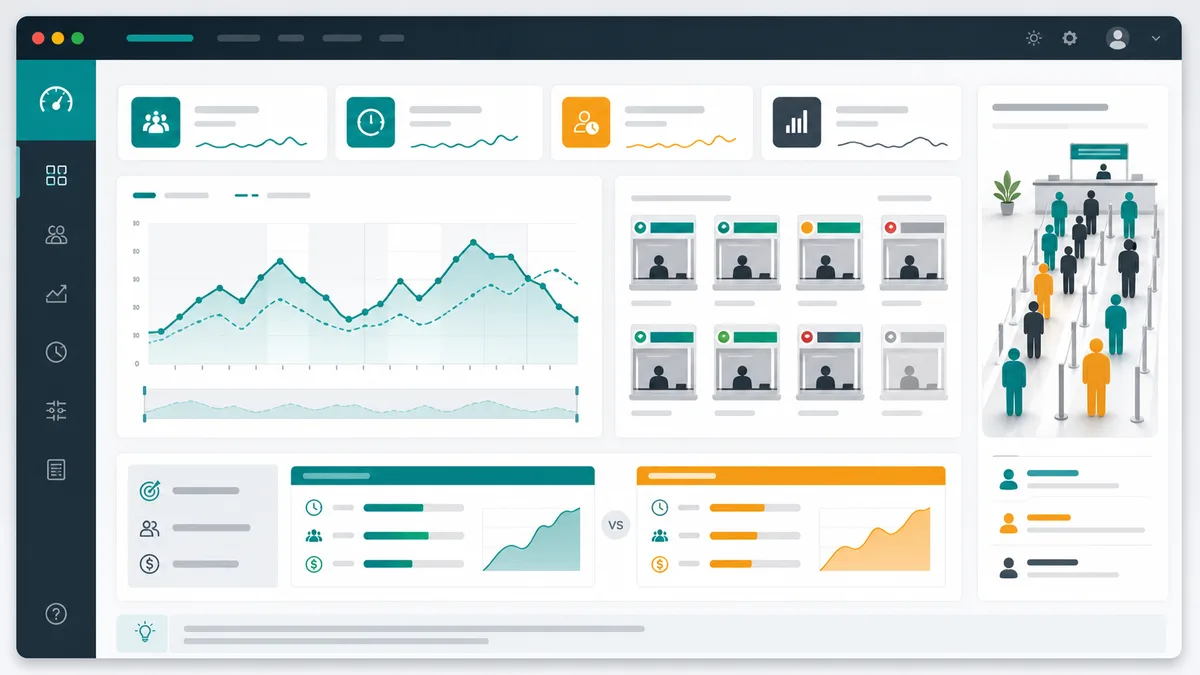
Model arrivals, service windows, service time variation, simulation duration, initial backlog, abandonment, and optimization scenarios for waiting lines.
Generate a personalized travel checklist by days, weather, season, trip type, transport, lodging, kids, business, beach, camping, outdoor, formal, and electronics needs.
Common questions about how Sleep Schedule Simulator estimates cycles, latency, wake-up options, and routine variability.
Sleep Schedule Simulator subtracts preparation time when needed, then subtracts 90-minute sleep cycles and your average time to fall asleep from the target wake-up time.
Sleep cycles are commonly described as repeating roughly every 90 minutes, although real cycles vary by person and night.
No. Sleep Schedule Simulator provides planning estimates, not a medical diagnosis or a guarantee of sleep quality.
It keeps recommendations focused on cycle boundaries, which may reduce the chance of waking in a deeper stage compared with a random alarm time.
No. Cycle timing helps, but most adults still need enough total sleep. Very short schedules are flagged as sleep deprived.
Open Sleep Schedule Simulator, enter a wake-up time such as 07:00, add a 15-minute sleep latency, and compare several bedtimes.
Use Sleep Schedule Simulator to balance cycles, total sleep, prep time, and routine consistency instead of looking at hours alone.
Free, browser-based, and designed for everyday schedule planning.