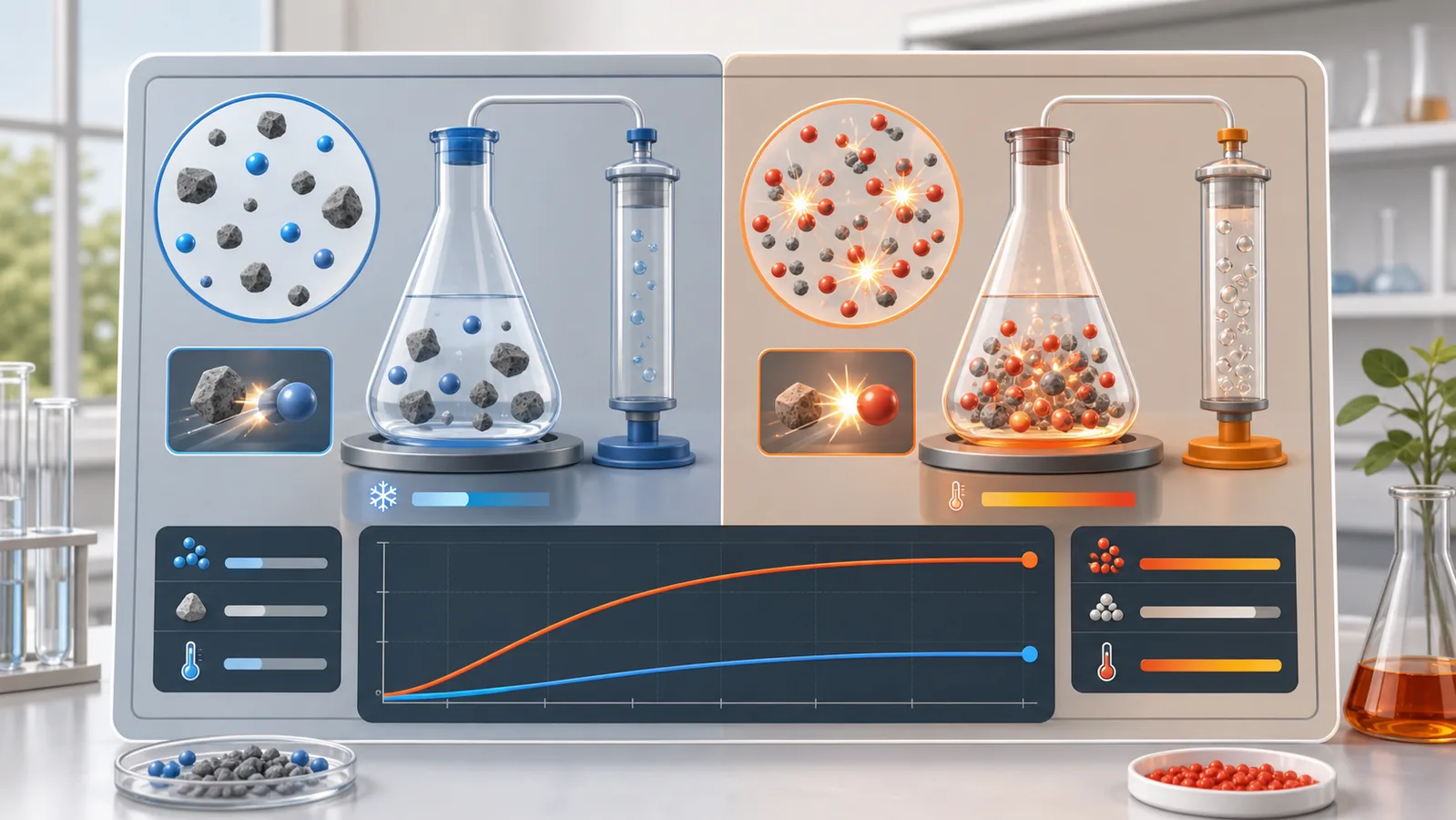
Free Reaction Rate Simulator

Reaction Rate Simulator visualize effective collisions, gas speed, concentration drop, and reaction curves

Reaction Rate Simulator lets students change concentration, temperature, particle size, and catalyst settings, then watch particle collisions and compare how quickly a reaction finishes.

Built for collision theory lessons, rate of reaction labs, chemistry homework, and classroom demonstrations.

Reaction Rate Simulator interactive collision lab

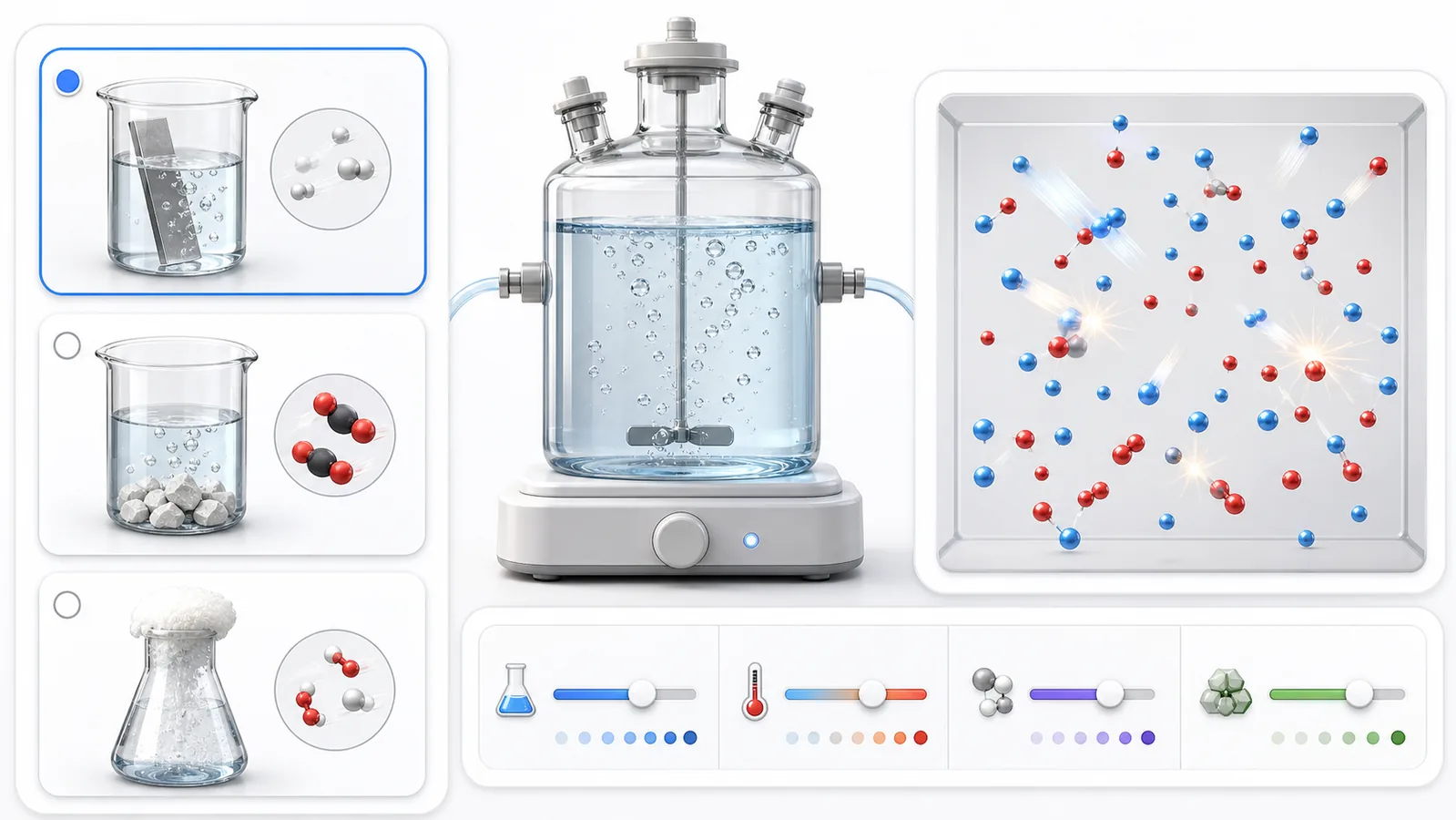
Start Reaction Rate Simulator here: choose a reaction scene, tune concentration, temperature, particle size, and catalyst, then compare effective collisions, gas generation, concentration drop, and completion time.

Reaction Rate Simulator controls

Set one reaction condition at a time or combine changes to see how the collision model responds.

Share Reaction Rate Simulator

Share the clean page or copy a result link that restores this Reaction Rate Simulator setup.

Virtual reaction bench

Magnesium + hydrochloric acid

Medium rate

Effective collisions

0 /s

Estimated finish time

0 s

Gas generation speed

0 mL/min

Reaction curve

Reaction Rate Simulator curve

Current run
100 50 0 0 time

Collision theory explanation

Condition comparison

Condition Time Rate

Change a condition, then add a comparison run to see which setup finishes faster.

Reaction Rate Simulator principle check

Reaction Rate Simulator is an educational model. The curves are simplified to show trends from collision theory, not to replace measured kinetic data.

Reaction Rate Simulator collision workflow

Reaction Rate Simulator links condition sliders, particle collisions, gas collection, and reaction curves in one student-friendly lab.

Reaction Rate Simulator scenario controls

Choose magnesium with hydrochloric acid, calcium carbonate with hydrochloric acid, or hydrogen peroxide decomposition, then tune the factors that change rate.

Reaction Rate Simulator preview showing reaction scenario cards, concentration, temperature, particle size, catalyst controls, and particle collisions

Reaction Rate Simulator comparison curves

Reaction Rate Simulator compares completion time, gas speed, effective collisions, and concentration decrease so students can explain why one setup is faster.

Reaction Rate Simulator preview showing slow and fast reaction conditions with particle collision bursts and reaction rate curves

Reaction Rate Simulator quick guide

Use this Reaction Rate Simulator guide to isolate concentration, temperature, surface area, and catalyst effects.

01

Reaction Rate Simulator choose a reaction

Pick a reaction scene that matches the lesson: metal plus acid, carbonate plus acid, or hydrogen peroxide decomposition.

  • Use magnesium with acid to discuss hydrogen gas formation.
  • Use calcium carbonate with acid to connect surface area and carbon dioxide production.
Open Reaction Rate Simulator
02

Reaction Rate Simulator change one factor

Adjust one control first, then watch particle speed, effective collisions, gas generation, and concentration curves update.

  • Increase concentration to create more collision chances.
  • Decrease particle size to expose more reacting surface.
Test Reaction Rate Simulator factors
03

Reaction Rate Simulator compare runs

Save a comparison run, change another condition, and explain why the finish time or gas speed changed.

Keep all other variables constant when you want a fair comparison.

Compare Reaction Rate Simulator runs

Reaction Rate Simulator features

Reaction Rate Simulator gives students concrete outputs for the main rate-of-reaction factors.

Reaction Rate Simulator particle collisions

Watch collision density and successful collision sparks respond as concentration, temperature, surface area, and catalyst settings change.

Open Reaction Rate Simulator

Reaction Rate Simulator gas graph

Track gas produced and reactant concentration left with smooth curves that make fast and slow reactions easy to compare.

Open Reaction Rate Simulator

Reaction Rate Simulator condition table

Compare completion time and gas generation speed for current and saved runs without leaving the simulator.

Open Reaction Rate Simulator

Reaction Rate Simulator temperature model

Raise temperature to see more energetic effective collisions and a steeper reaction curve.

Open Reaction Rate Simulator

Reaction Rate Simulator catalyst toggle

Turn the catalyst on and off to see how it increases successful collisions without being a reactant.

Open Reaction Rate Simulator

Reaction Rate Simulator share links

Copy a result link only when needed, so the clean Reaction Rate Simulator URL stays simple for normal visits.

Open Reaction Rate Simulator

Reaction Rate Simulator study use cases

Reaction Rate Simulator supports labs, homework, and quick demonstrations about why reactions speed up or slow down.

Reaction Rate Simulator for students

Practice explaining rate changes with visible collisions, gas output, and concentration curves.

Study
Open Reaction Rate Simulator

Reaction Rate Simulator for teachers

Demonstrate collision theory before a lab without needing chemicals, timers, or gas syringes.

Classroom
Open Reaction Rate Simulator

Reaction Rate Simulator for revision

Review concentration, temperature, surface area, and catalyst effects side by side.

Review
Open Reaction Rate Simulator

Reaction Rate Simulator for reports

Use the comparison table to describe which factor changed the rate and why the curve became steeper.

Report
Open Reaction Rate Simulator

More simulators like Reaction Rate Simulator

After Reaction Rate Simulator, explore other science, math, and classroom tools.

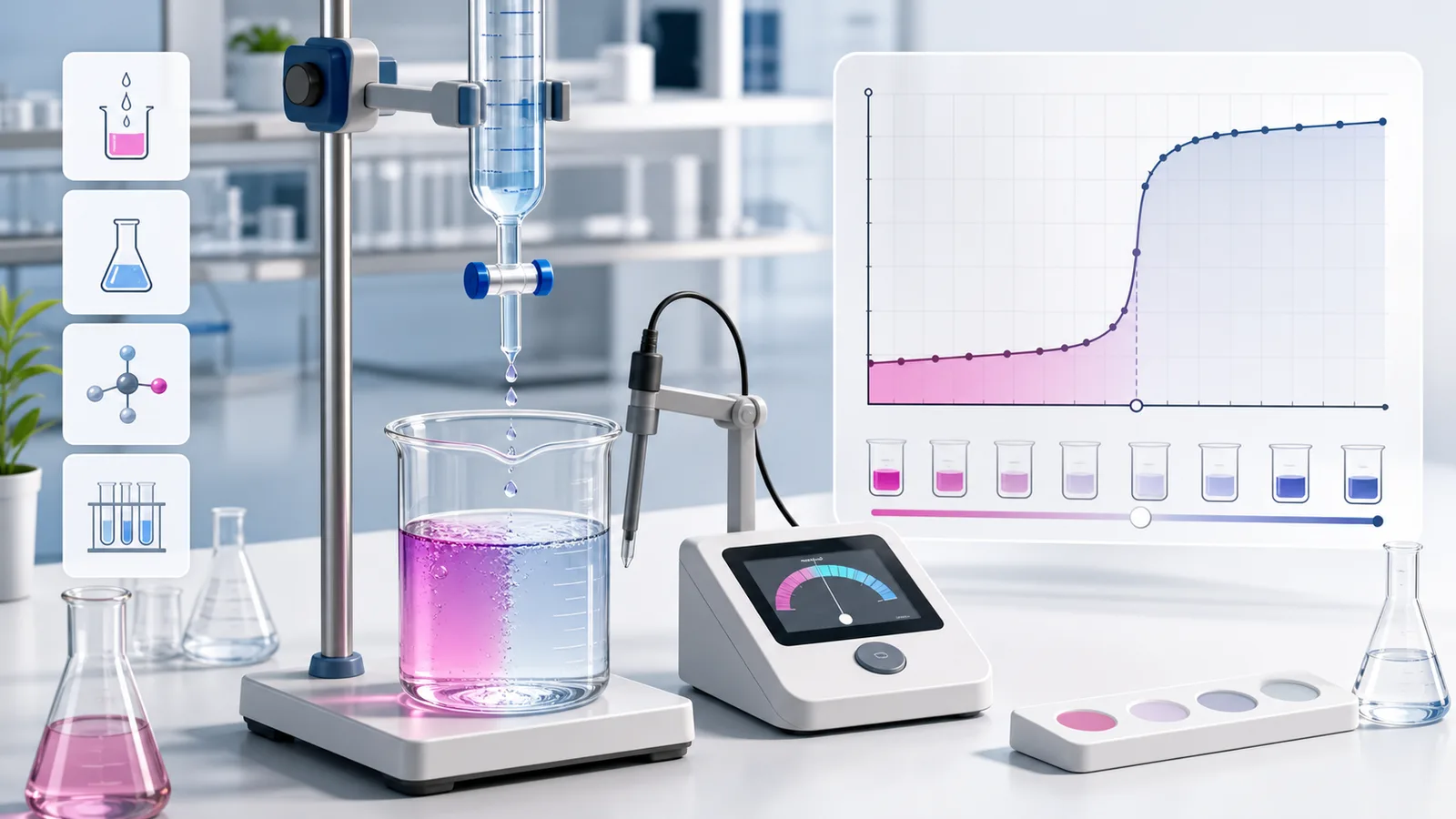
Acid Base Titration Simulator

Choose acid and base types, add titrant drop by drop, and see pH, color change, equivalence point, unknown concentration, error, and conclusion.

Acid Base Titration Simulator preview showing a burette, beaker color change, pH curve, equivalence point, and concentration calculation
Open simulator

Chemical Equilibrium Simulator

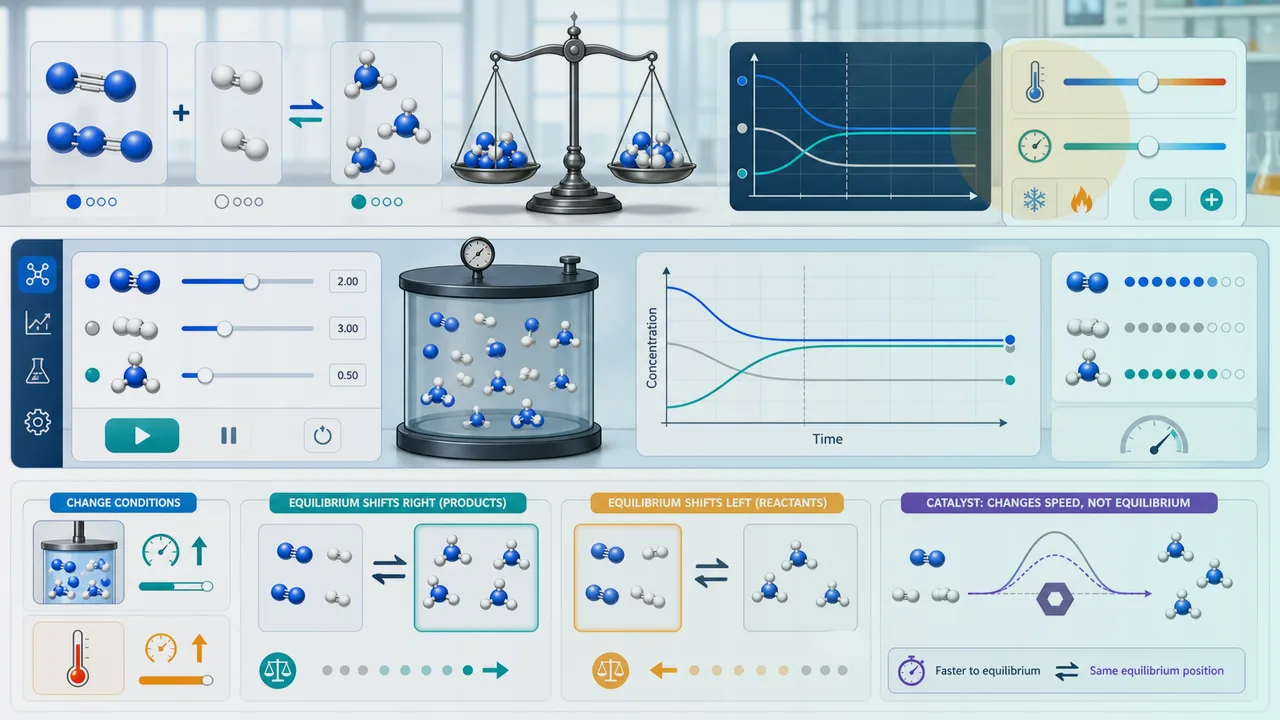
Choose a reversible reaction, set initial concentrations, temperature, pressure, and catalyst, then watch concentration curves reach equilibrium and explain shifts.

Chemical Equilibrium Simulator preview showing reversible reaction controls, concentration curves, equilibrium constant, reaction quotient, and shift explanation
Open simulator

Calorimetry Simulator

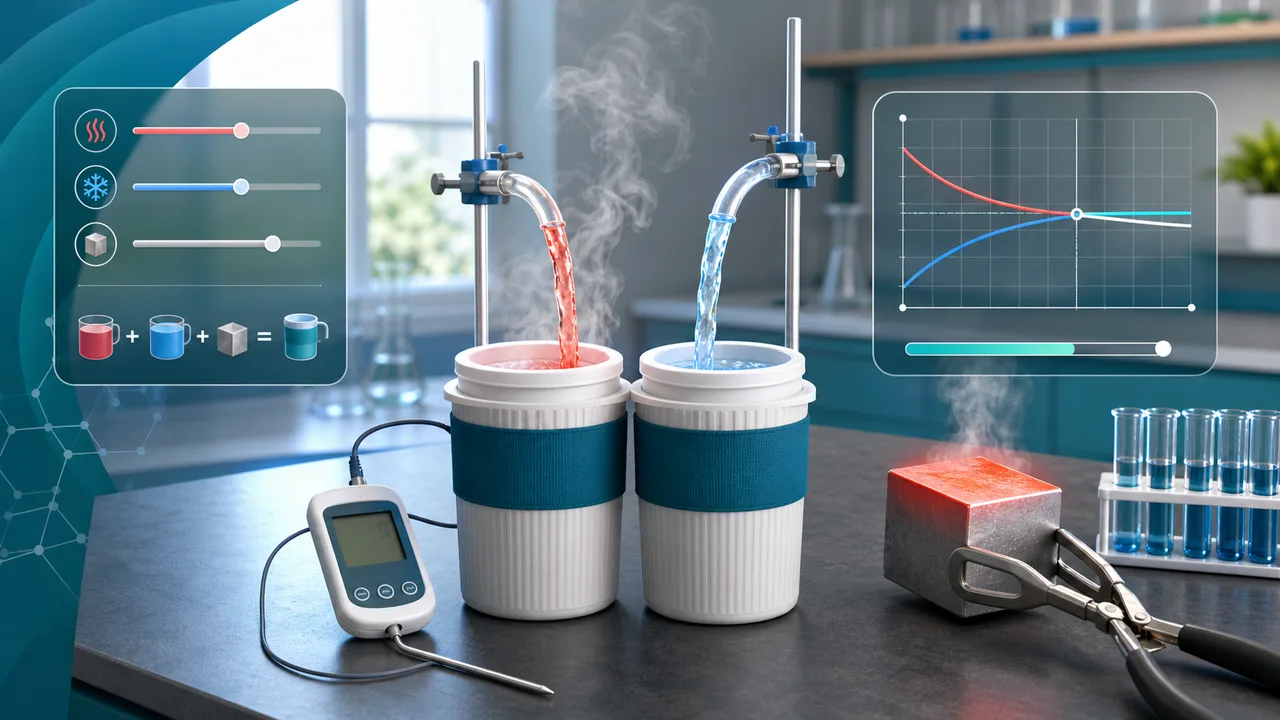
Mix hot water, cold water, metal samples, and a calorimeter cup to calculate final temperature, heat flow, and unknown specific heat.

Calorimetry Simulator preview showing an insulated cup, thermometer, metal block, hot and cold water, and a temperature graph
Open simulator

Ohm’s Law Lab Simulator

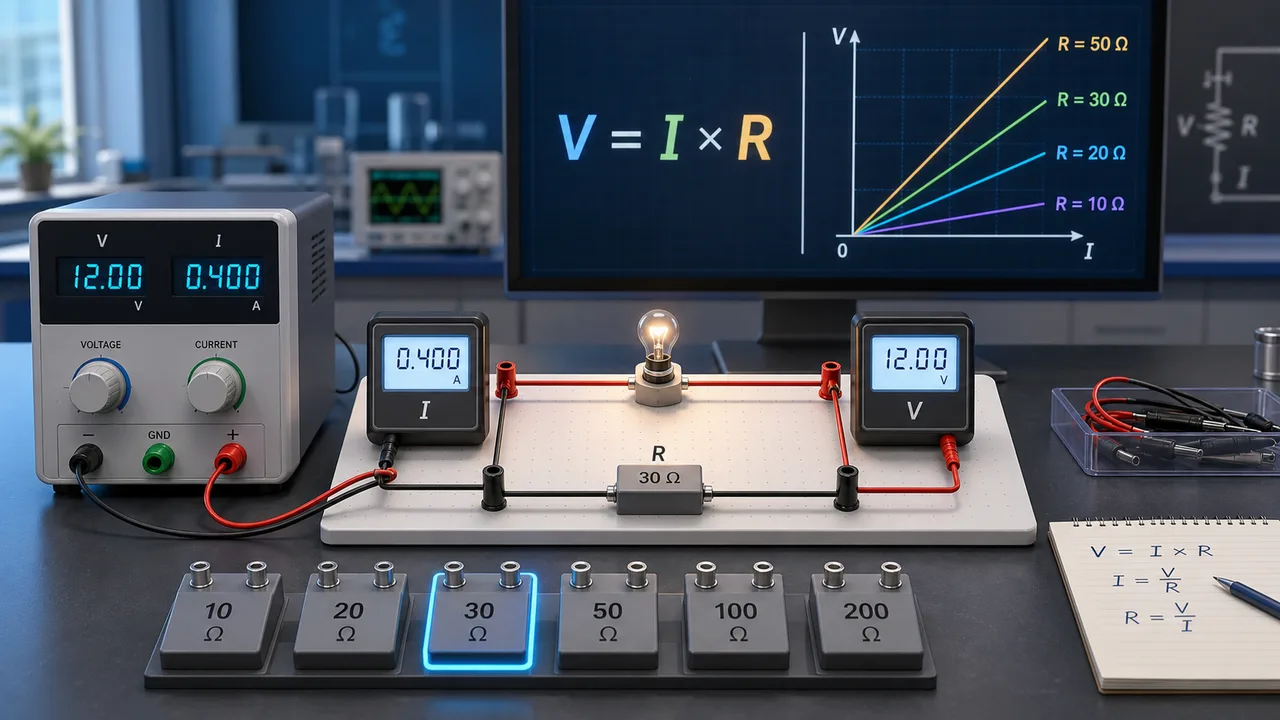
Set voltage, resistance, connection mode, meters, and bulb, then record data, plot a V-I graph, and estimate unknown resistance.

Ohm’s Law Lab Simulator preview showing a circuit board, power supply, ammeter, voltmeter, bulb, and V-I graph
Open simulator
View all simulators

Reaction Rate Simulator FAQ

Fast answers about Reaction Rate Simulator, collision theory, catalysts, surface area, concentration, and temperature.

What does Reaction Rate Simulator show?

Reaction Rate Simulator shows how changing concentration, temperature, particle size, and catalyst settings affects effective collisions, gas formation, concentration decrease, and estimated reaction finish time.

Why does smaller particle size make the Reaction Rate Simulator faster?

Smaller solid pieces expose more surface area, so more acid particles can collide with the solid at the same time. The Reaction Rate Simulator represents that as more effective collisions and a steeper curve.

Does the Reaction Rate Simulator use real lab data?

Reaction Rate Simulator uses a simplified educational collision model. It is designed to show reliable trends, but real kinetic data depends on exact chemicals, apparatus, purity, mixing, and measurement method.

How should I use Reaction Rate Simulator for a fair test?

Change one variable at a time, add a comparison run, and keep the other settings constant. That makes it easier to explain which factor caused the rate change.

Start Reaction Rate Simulator now

Open Reaction Rate Simulator, choose a reaction scene, and test the conditions that make reactions faster or slower.

Compare collision counts, gas generation speed, concentration decrease, and finish time in one browser-based lab.

Reaction Rate Simulator runs in your browser with no sign-up.